Water Leak Detection
Accurate Tools for Finding Leaks Without the Guesswork
Reducing water loss starts with precise detection. At Eastcom Associates, we supply industry-proven water leak detection equipment that helps municipalities, contractors, and utilities locate underground leaks quickly—without costly trial-and-error excavation.
From pinpointing leaks in busy commercial zones to surveying buried mains in mixed-material networks, every product we carry is engineered to deliver clear results, reduce labor, and cut operational downtime.



SubSurface LC-5000 Digital Dual Leak Correlator

SubSurface LC-5000 Digital Quatro Leak Correlator
.png)
Water Leak Detection: Technical Guide
Water leak detection technologies are essential for identifying, pinpointing, and diagnosing leaks in pressurized water distribution systems, service lines, and municipal infrastructure. Modern systems detect leaks by analyzing acoustic signatures, pressure changes, and ground vibrations—providing non-invasive, cost-effective alternatives to excavation or guesswork.
These solutions are widely used by water utilities, municipalities, plumbers, engineering teams, and leak detection contractors who depend on precision, speed, and reliability in the field.
How Water Leak Detection Works
Leak detection equipment identifies the noise or pressure disturbance created when water escapes a pipe. As water exits under pressure, it generates acoustic vibrations that travel along the pipe walls, through soil, and sometimes to ground level. Sensitive sensors capture these signatures and translate them into usable field data.
Key Detection Methods
Acoustic Leak Detection
Sensors detect the frequency and intensity of leak-related noise. These tools allow operators to pinpoint leaks by comparing noise levels at different points along the pipe.
Correlating Leak Detection
Two or more sensors are placed along the pipeline. The system calculates leak location based on the time delay between signals—a highly accurate method for longer runs or complex networks.
Ground Microphones
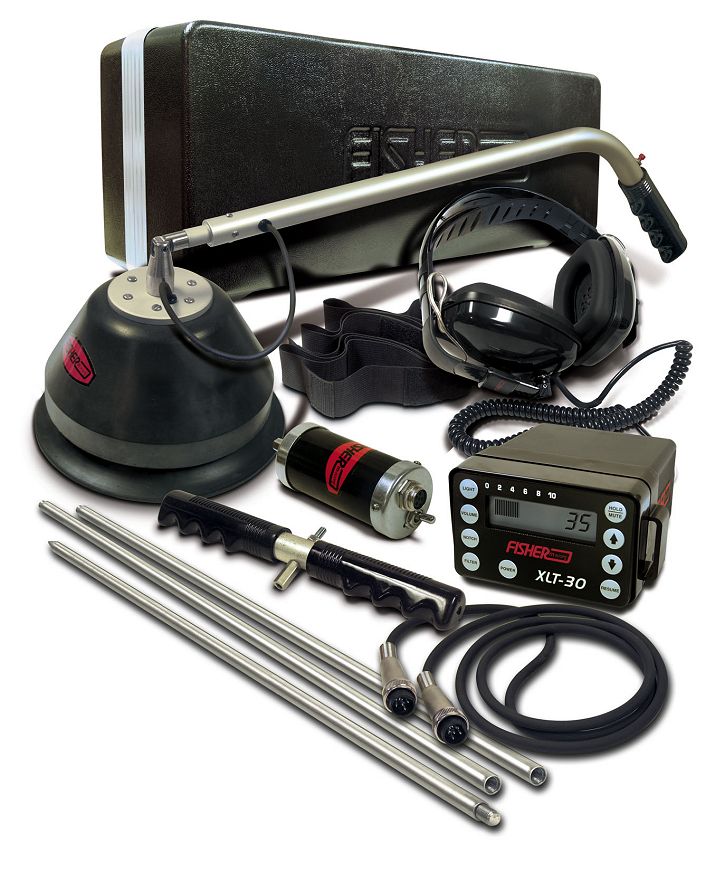
Used during pinpointing, ground mics amplify leak sounds through pavement, soil, or concrete to isolate the exact spot before digging.
Pressure Loggers & Monitoring
Advanced systems log pressure trends and identify intermittent or non-surfacing leaks before they become failures.
Acoustic Characteristics
Understanding leak acoustics is critical for accurate diagnosis.
- Pipe Material:
- Metal (ductile iron, steel) transmits sound efficiently, making leaks easier to detect.
- PVC & HDPE attenuate sound, requiring more sensitive equipment.
- Metal (ductile iron, steel) transmits sound efficiently, making leaks easier to detect.
- Pipe Diameter:
Smaller pipes transmit higher-frequency sounds; larger pipes generate lower-frequency, harder-to-hear signatures. - Soil Type:
Loose, dry soils dampen leak noise; dense soils transmit sound more effectively.
- Pressure:
Higher operating pressure increases leak noise volume, improving detection accuracy.
Typical Leak Frequencies by Material
Core Use Cases
Water leak detection systems serve a wide range of municipal and commercial applications.
Municipal Water Systems
Locate leaks in distribution mains, service lines, and hydrant laterals to reduce NRW (Non-Revenue Water) and prevent costly infrastructure loss.
Plumbing & Facility Maintenance
Identify leaks under slab foundations, commercial facilities, schools, or hospitals with minimal disruption.
Irrigation & Agricultural Systems
Detect pressure losses or buried irrigation line failures.
Industrial Plants
Monitor chilled water loops, process lines, and in-facility piping that cannot be easily exposed.
District Metered Areas (DMA) Analysis
Pressure loggers and correlators help utilities isolate leakage zones across network sectors.
Technical Features of Modern Leak Detection Systems
Today's equipment integrates advanced sensing, digital signal processing, wireless communication, and ergonomic design to improve field workflows.
Acoustic Sensors
High-sensitivity accelerometers or hydrophones detect leak signatures along valves, meters, or hydrants.
Digital Correlation
Algorithms process noise patterns to determine leak locations, even in noisy or complex networks.
Real-Time Visual Display
Operators interpret noise intensity graphs, frequency spectra, and correlation curves onsite.
Frequency Filtering
Allows tuning to material-specific frequencies for more accurate results.
GPS & Mapping Integration
Many systems log leak locations directly into GIS for asset management.
Wireless Communication
Sensors often sync via radio, Bluetooth, or cloud platforms for fast deployment.
Rugged Construction
Waterproof housings, shock-resistant sensors, and field-grade cases designed for utility environments.
Feature Overview
Performance Considerations
Choosing the correct leak detection technology depends on several technical variables
Pipe Material
Metal pipes transmit leak noise well; plastics require advanced filtration and more sensitive sensors.
Pressure Levels
Higher pressure increases signal strength. Systems must accommodate a wide dynamic range.
Distance Between Access Points
Longer distances benefit from correlators; short distances are ideal for acoustic listening devices.
Environmental Noise
Traffic, pumps, HVAC systems, and groundwater movement can mask leak sounds.
Operator Skill
Accurate pinpointing requires training in frequency interpretation, noise differentiation, and proper ground mic placement.
Choosing the Right Leak Detection Solution
Selecting the best system depends on:
- Pipe material (PVC, HDPE, cast iron, ductile iron)
- Pressure zone characteristics
- Access to valves/hydrants
- Environmental noise levels
- Requirement for pinpointing vs. surveying
Eastcom’s specialists help utilities and contractors evaluate sensor sensitivity, correlation capabilities, ergonomics, and software features to ensure accurate and efficient leak locating.
Why Eastcom?
Eastcom Associates supplies industry-leading water leak detection technologies backed by decades of field expertise, technical support, and product training. Whether you are conducting routine leak surveys, diagnosing non-revenue water issues, or performing pinpoint leak detection, Eastcom ensures you get the right tools for your specific network and soil conditions.
➡ Contact Eastcom today to find the best leak detection solution for your application.