Air Powered Excavation Equipment
Innovative Air-Powered Excavation Equipment for Professional Use
Air Powered Excavation: A Safer Alternative
Air powered excavation equipment, utilizing compressed air, offers a non-mechanized means of breaking down soil,
making it ideal for sensitive excavation areas. This method is particularly safe near buried utilities, such as power lines or
gas pipes, and around delicate structures like tree roots.

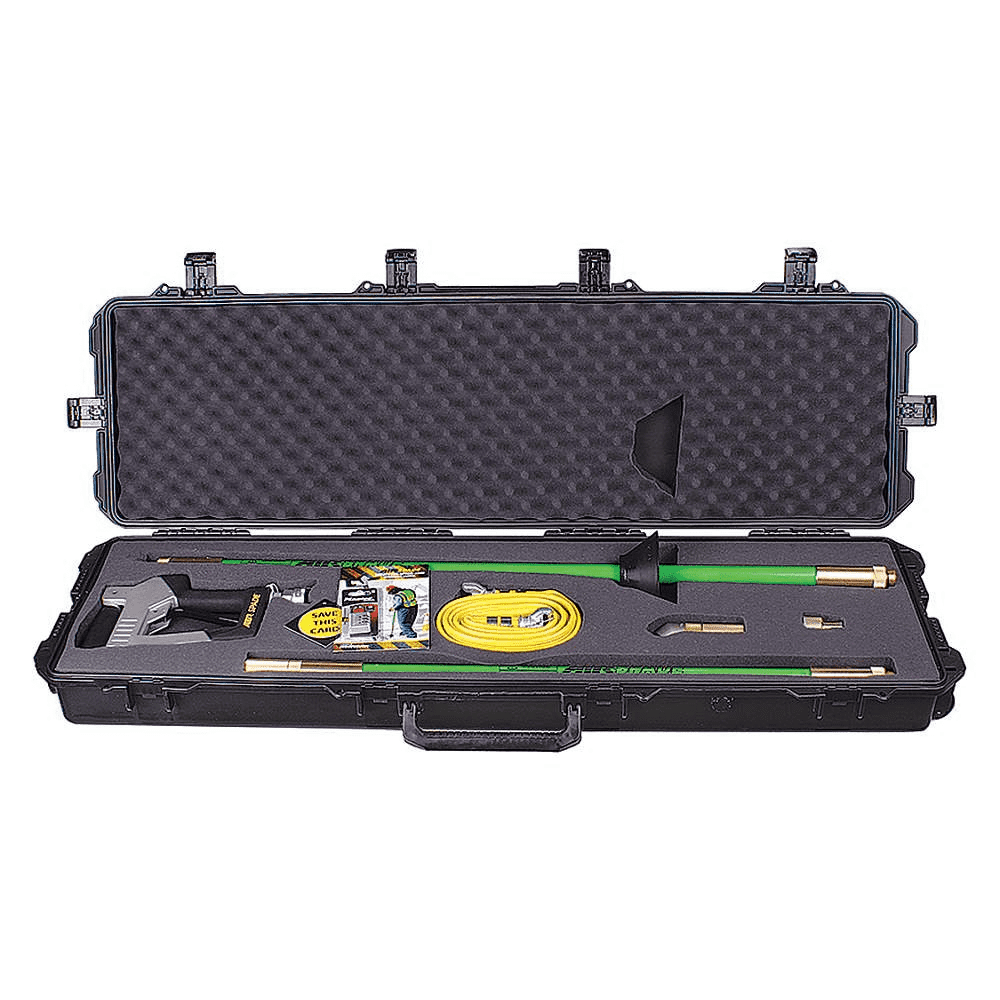
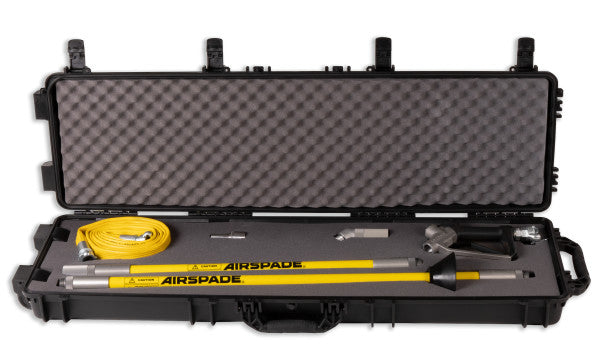


Air-Powered Excavation Equipment: Technical Guide
Air-powered excavation—also known as pneumatic excavation, air knife excavation, or dry excavation—is a non-destructive digging method that uses high-pressure compressed air to safely expose buried utilities without damaging them. This method is widely used by utility locators, municipal crews, telecom installers, gas and electric utilities, environmental engineers, and construction contractors who need fast, precise, and damage-free subsurface exposure.
Air excavation uses a high-velocity air stream—typically 120–185 CFM at 120–175 psi—to break apart compacted or clay-heavy soils. An air lance or air knife fractures the soil while leaving underground utilities completely untouched. Dislodged soil is then removed using a compatible dry vacuum system. Unlike mechanical digging or hydro excavation, air excavation keeps soil dry, requires less cleanup, and allows the removed soil to be reused as backfill.
Key Benefits of Air Excavation
- Non-destructive to gas lines, fiber cables, water services, PVC, HDPE, and electric conduits
- No slurry—cleaner, faster restoration compared to hydro excavation
- Re-usable spoil (dry soil can be placed back immediately)
- Safer in high-density utility corridors
- Ideal for environmental or root-sensitive work
- Operates in rocky, compacted, or frozen soils with proper nozzle design
How Air Excavation Works
Air-powered excavation relies on three core components:
- Compressed Air Supply
- 120–185 CFM recommended
- 120–175 psi operating pressure
- ¾"–1" hose diameter for optimal flow
- Moisture traps/filtering to maintain consistent performance
- 120–185 CFM recommended
- Air Lance / Air Knife
- Converts compressed air into a high-velocity, non-destructive air jet
- Breaks soil but leaves utility surfaces completely intact
- Converts compressed air into a high-velocity, non-destructive air jet
- Vacuum Extraction (Dry Vac)
- Removes soil fragments
- Keeps excavation hole clean
- Eliminates slurry disposal
- Removes soil fragments
Air Excavation System Requirements
Primary Applications of Air-Powered Excavation
Air excavation is selected when maximum utility protection and minimum environmental disturbance are required.
1. Utility Daylighting / Potholing
Safely expose utilities to verify depth and location.
Compatible utilities: gas, electric, telecom, fiber, PVC/HDPE, conduit banks.
2. Keyhole Excavation
Create small, precise holes (12–18") for targeted utility repair.
3. Valve & Curb Box Cleaning
Clear debris and compacted soil without introducing water.
4. Arborist & Root Zone Excavation
Expose roots for inspection or aeration without cutting or damaging them.
5. Environmental & Geotechnical Soil Sampling
Clean soil removal for ESA testing, contamination delineation, and boring access.
6. Trenching for Shallow Utilities
Open narrow trenches for microducts, drop lines, and small-diameter services.
Application vs. Typical Targets
Key Technical Features of Modern Air Excavation Tools
Supersonic Nozzle Technology (AirSpade®)
- Patented nozzles accelerate airflow to supersonic speeds
- Maximizes soil penetration while keeping utilities unharmed
Non-Conductive Tool Bodies
- Fiberglass or polymer handles ensure electrical safety
Moisture Control Systems
- Removes compressor moisture for consistent jet velocity
Rugged Ergonomic Design
- Lightweight construction reduces operator fatigue
- Built to withstand daily municipal/utility use
Dry Vacuum Compatibility
- Pairs with portable or trailer-mounted vacuums
- Supports HEPA filtration for environmental work
Technical Feature Overview (At-a-Glance)
Performance Considerations Before Choosing Air Excavation
Soil Type
- Sandy/loose soils: Fastest excavation
- Compacted clay: Slower but safe; no utility risk
- Rocky fill: Air removes fines; rocks can be extracted manually
- Frozen ground: Heated air systems recommended
Utility Density
Higher-density underground corridors benefit most from non-destructive air methods.
Environmental Conditions
- No water runoff
- No slurry hauling
- Minimal restoration
Operator Skill Requirements
Proper nozzle angle, distance, and air control accelerate performance dramatically.
Air Excavation Equipment Manufacturers (Compared)
Eastcom Associates supplies top-tier pneumatic excavation tools used by utility and environmental professionals across the U.S.
AirSpade®
- Market leader in pneumatic excavation
- Supersonic nozzle technology
- Ideal for utility locating, arborist work, and soil sampling
TerraProbe / Professional Pneumatic Systems
- Durable, heavy-duty designs
- Excellent for construction, geotech, and environmental applications
Vacuum System Options
- Portable dry vacs: 90–150 CFM
- Trailer-mounted vacs: 200+ CFM
- HEPA filtration options for environmental projects
Air Excavation System Comparison Table
How to Choose the Right Air-Powered Excavation Tool
Consider the following before selecting a system:
- Soil type and compaction level
- Required excavation depth and diameter
- Utility risk and density
- Available compressor size (CFM/PSI)
- Environmental restrictions
- Vacuum system availability
Eastcom helps evaluate your air supply, nozzle performance, soil type, and operational workflow to match you with the correct system.
Why Buy Air Excavation Tools From Eastcom Associates?
Eastcom Associates is a leading supplier of non-destructive excavation tools for utility professionals, contractors, and engineering firms. We provide:
- Expert product matching for your exact application
- Field-tested recommendations for soil type, compressor size, and accessories
- Training and technical support
- Access to premium manufacturers like AirSpade®
Whether you need equipment for utility locating, root-zone excavation, soil sampling, or precision daylighting, Eastcom ensures your crew is equipped with the safest and most effective air-powered excavation solutions.
➡ Contact Eastcom today to find the ideal air-powered excavation equipment for your next project.